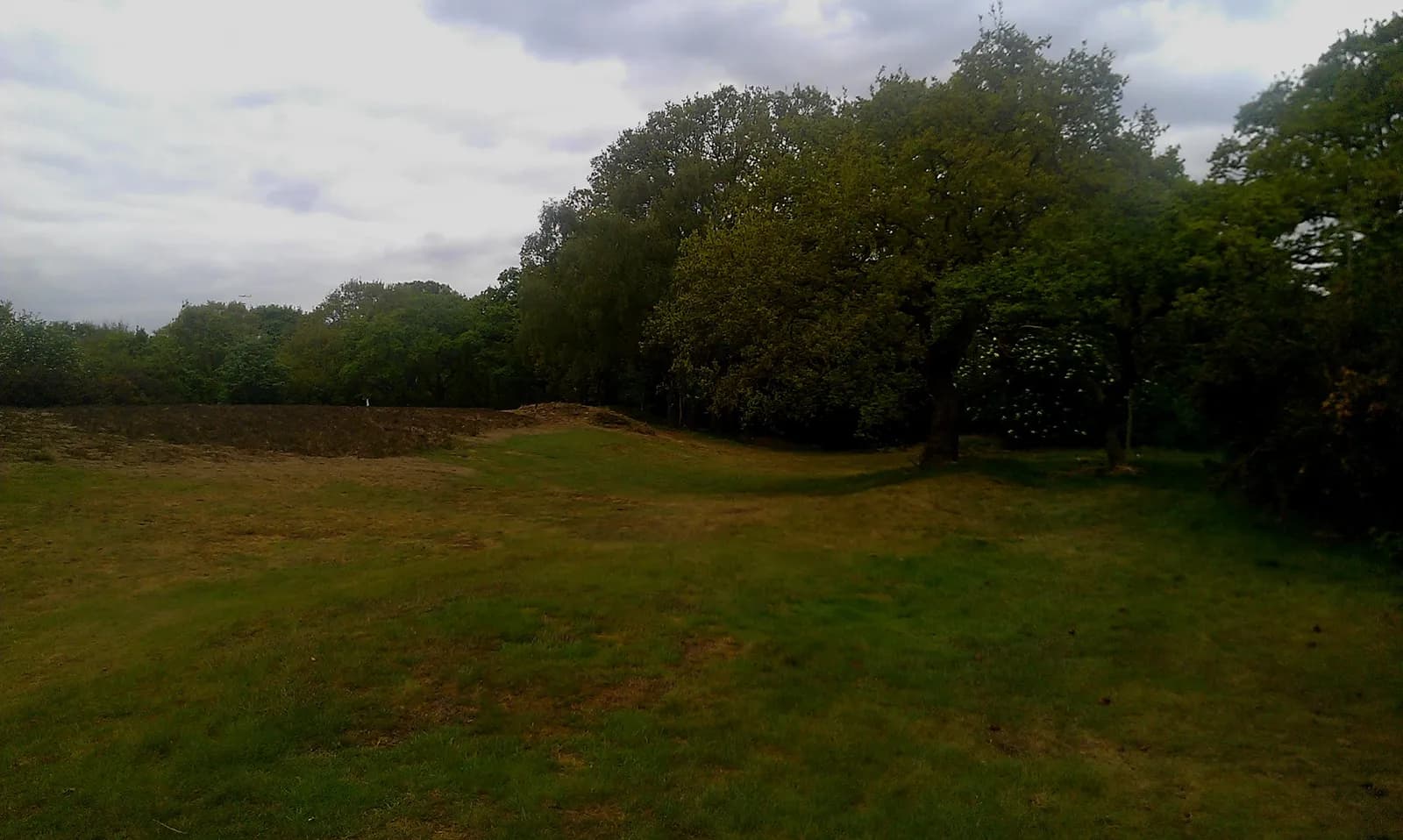
Tucked away at the southern end of Wimbledon Common lies an earthwork enclosure that predates the Roman invasion of Britain by several centuries. Caesar's Camp, as it has been known since the nineteenth century, is an Iron Age hillfort whose name and true origins continue to intrigue local historians and archaeologists.
Iron Age Origins
Caesar's Camp is classified as an Iron Age hillfort, sometimes described as an oppidum. The main phase of occupation is generally dated to between the sixth and fourth centuries BC, though some evidence suggests the possibility of earlier Bronze Age activity. The enclosure would have dominated the landscape long before the first Roman legionaries reached British shores.
A Victorian Misnomer
The name "Caesar's Camp" appears to date only from the nineteenth century, making it a relatively recent label for a far older site. The hillfort was built centuries before Julius Caesar's expeditions to Britain in 55 and 54 BC, and no evidence links the enclosure to Caesar himself. Some sources suggest the fort may have been stormed during the Claudian invasion of AD 43, possibly by Legio II Augusta under the command of Vespasian; this would still place any Roman military involvement hundreds of years after the hillfort's construction.
What Survives
The most visible surviving remains are the earthworks of the ditch between the two main ramparts. Modern archaeological survey techniques, including lidar imaging, have helped to document the extent of the enclosure and its place within the wider landscape. The site sits at the southern end of Wimbledon Common on land also used by the Royal Wimbledon Golf Club, though a public footpath runs through the middle of the fort.
Destruction and Conservation
The hillfort has not escaped damage. In 1875, the surrounding Bronze Age barrows were deliberately destroyed by John Erle-Drax, resulting in the loss of archaeological evidence that would have illuminated the site's earlier ritual use. The wider common nevertheless benefits from strong legal protection under the Wimbledon and Putney Commons Act 1871, which prevents enclosure and development. The land is administered by the Wimbledon and Putney Commons Conservators, a registered charity, and most of the common holds Site of Special Scientific Interest and Special Area of Conservation status.
Visiting the Site
Visitors can reach the hillfort on foot via the public footpath that crosses the site. Wimbledon Common itself covers 460 hectares when combined with Putney Heath and Putney Lower Common, making it the largest expanse of heathland in London. The Wimbledon Common Windmill, near the centre of the common, operates as an information centre and tearoom for those exploring the area.