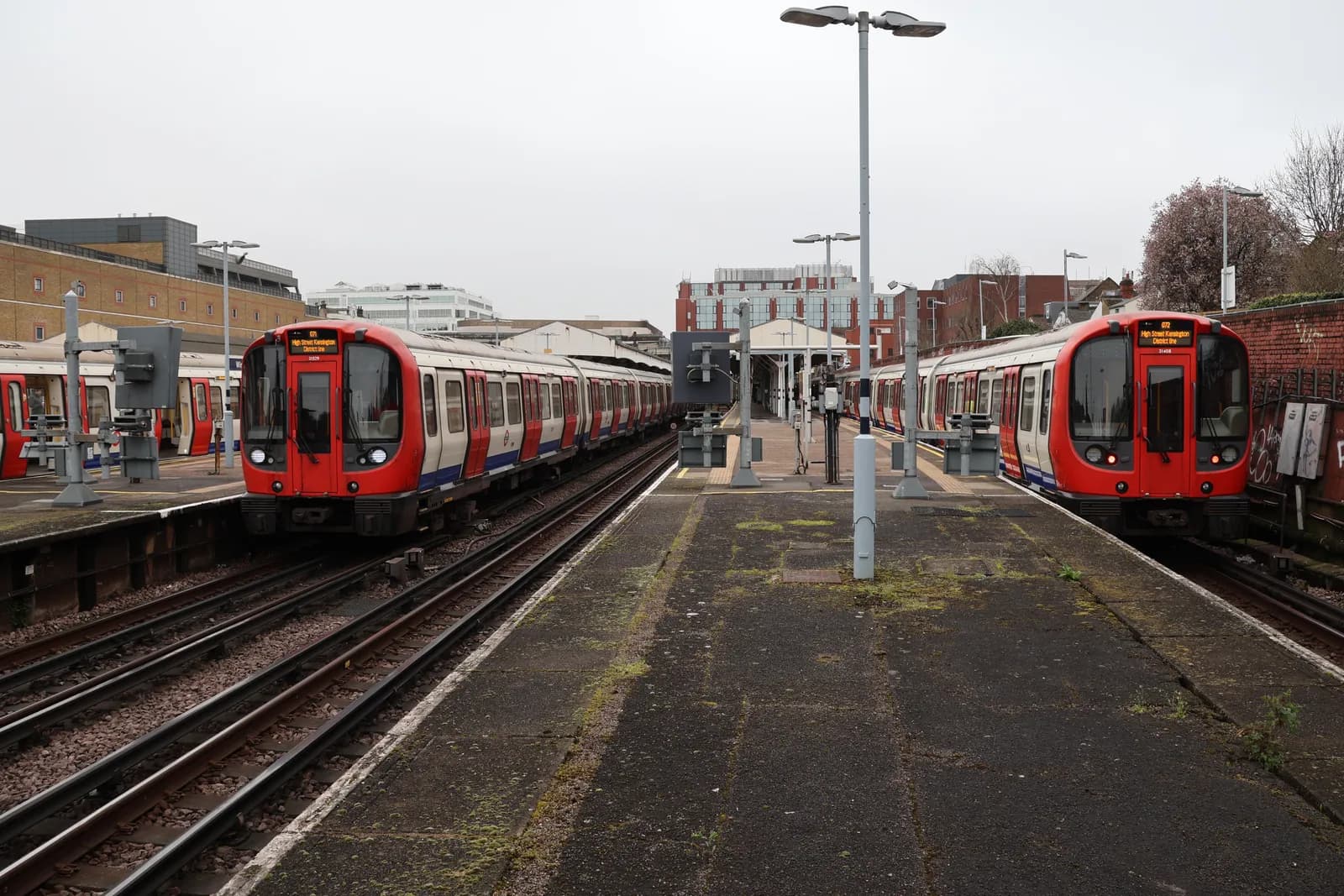
On 21 May 1838, a modest railway station opened at the bottom of Wimbledon Hill. Few could have predicted that this single event would fundamentally redraw the map of the settlement, shift its economic centre, and spark a population explosion that would turn a quiet village into one of London's most prominent suburbs within a single lifetime.
The Arrival of the London and South Western Railway
The station that opened that spring day was the work of the London and Southampton Railway, a company that would be renamed the London and South Western Railway (L&SWR) by Act of Parliament the following year. The line was built to connect the capital with Southampton, with Wimbledon situated on the direct route from the Nine Elms terminus towards Woking and the south coast.
The original Wimbledon station stood to the south of the current building, on the opposite side of Wimbledon Bridge. It formed part of the first section of the line to open, running from Nine Elms to Woking Common. The railway was immediately successful, achieving its objective of reducing the price of coal and agricultural goods whilst opening passenger traffic between London and the south.
Wimbledon Before the Railway
Prior to 1838, Wimbledon was a village in the truest sense. The settlement clustered around the top of the hill near the Common, an area still referred to as "the village" today. The population at the start of the 19th century numbered approximately 1,000 residents. Life revolved around St Mary's Church, the manor houses of the wealthy, and the stagecoaches that rattled along the road to Portsmouth, stopping at the Dog and Fox public house to change horses.
The Wandle Valley, meanwhile, was already the most industrialised area in southern England. The Surrey Iron Railway, a horse-drawn plateway opened in 1803, served the mills and factories along the river. Yet this early transport infrastructure was dwarfed by what the steam railway would bring.
The Shift from Village to Town
The location of the 1838 station proved decisive. By placing the railway at the bottom of Wimbledon Hill rather than near the historic village centre, the L&SWR unwittingly determined the town's future geography. Growth shifted away from the hilltop village towards the station, creating the distinction between "the village" and "the town" that persists today.
The transformation was swift. By 1851, just thirteen years after the railway arrived, the population had risen to nearly 2,700. What followed was sustained growth of at least sixty per cent each decade until 1901, representing a fifteen-fold increase in fifty years. The Municipal Borough of Wimbledon, created in 1905, recorded a population of 41,652 by the census of 1901. By 1911, the figure reached approximately 55,000.
The Building Boom
The residential expansion that followed the railway was enabled by a crucial decision from the Spencer family, who owned Wimbledon Park. In the 1840s, they began selling portions of the estate as building land. Large detached houses first appeared in the north of the park, followed by villas and terraces stretching along the roads towards Putney, Merton Park, and Raynes Park.
The commercial centre developed along what is now The Broadway, distinct from the village shops on the High Street. Ely's department store opened in 1876, anchoring the new retail district. Wimbledon gained its first police station in 1870 and a public library in 1887. A Literary Institute was established by the early 1860s, reflecting the educational aspirations of the incoming middle class.
Wimbledon Becomes a Junction
The town's importance was amplified by its development as a railway junction. The Wimbledon and Croydon Railway opened on 22 October 1855, connecting the town to Croydon via a line that would eventually become a tram route in the late twentieth century. On 1 October 1868, the Tooting, Merton and Wimbledon Railway opened, linking Wimbledon to Streatham and bringing competition from the London, Brighton and South Coast Railway.
Raynes Park station opened on 30 October 1871, creating a new residential district named after the local landowner. The most significant change came on 3 June 1889, when the District Railway extended from Putney Bridge to Wimbledon, connecting the town directly to central London and bringing the underground network to south-west London.
Each new line required platform additions at Wimbledon. The station was completely rebuilt on its present site on 21 November 1881 in preparation for the District Railway arrival. Further reconstruction followed in the late 1920s, when the Southern Railway prepared for the opening of the Sutton line. The Portland stone entrance facade that stands today dates from this 1930 rebuilding.
The Commuter Suburb Takes Shape
The railway transformed not only where Wimbledon's residents lived, but how they lived. The early industrial character of the Wandle Valley gave way to a commuter suburb, as middle-class professionals discovered they could reside in fresh country air whilst working in the City. The stagecoach journey to London, once routine but not without the risk of highwaymen, became obsolete.
The Surrey Iron Railway, that early pioneer of 1803, closed in 1846 after a long period of dormancy, unable to compete with the speed and capacity of steam. The new railway age had rendered it redundant.
What Remains
Today's Wimbledon station bears little resemblance to the modest structure of 1838. Yet the legacy of that May morning is woven into the town's fabric. The division between Wimbledon Village, perched on the hill with its historic pubs and expensive boutiques, and Wimbledon Town, centred on the station and Broadway, remains the most visible consequence of where the railway company chose to lay its tracks.
The Victorian terraced streets, the Edwardian villas, the suburban expansion into Raynes Park and Merton Park; all trace their origins to the decision to build a station at the bottom of Wimbledon Hill in 1838. What began as a single stop on the line to Southampton became the engine of suburban growth, turning a village of 1,000 souls into a borough of 40,000 within the span of a single lifetime.